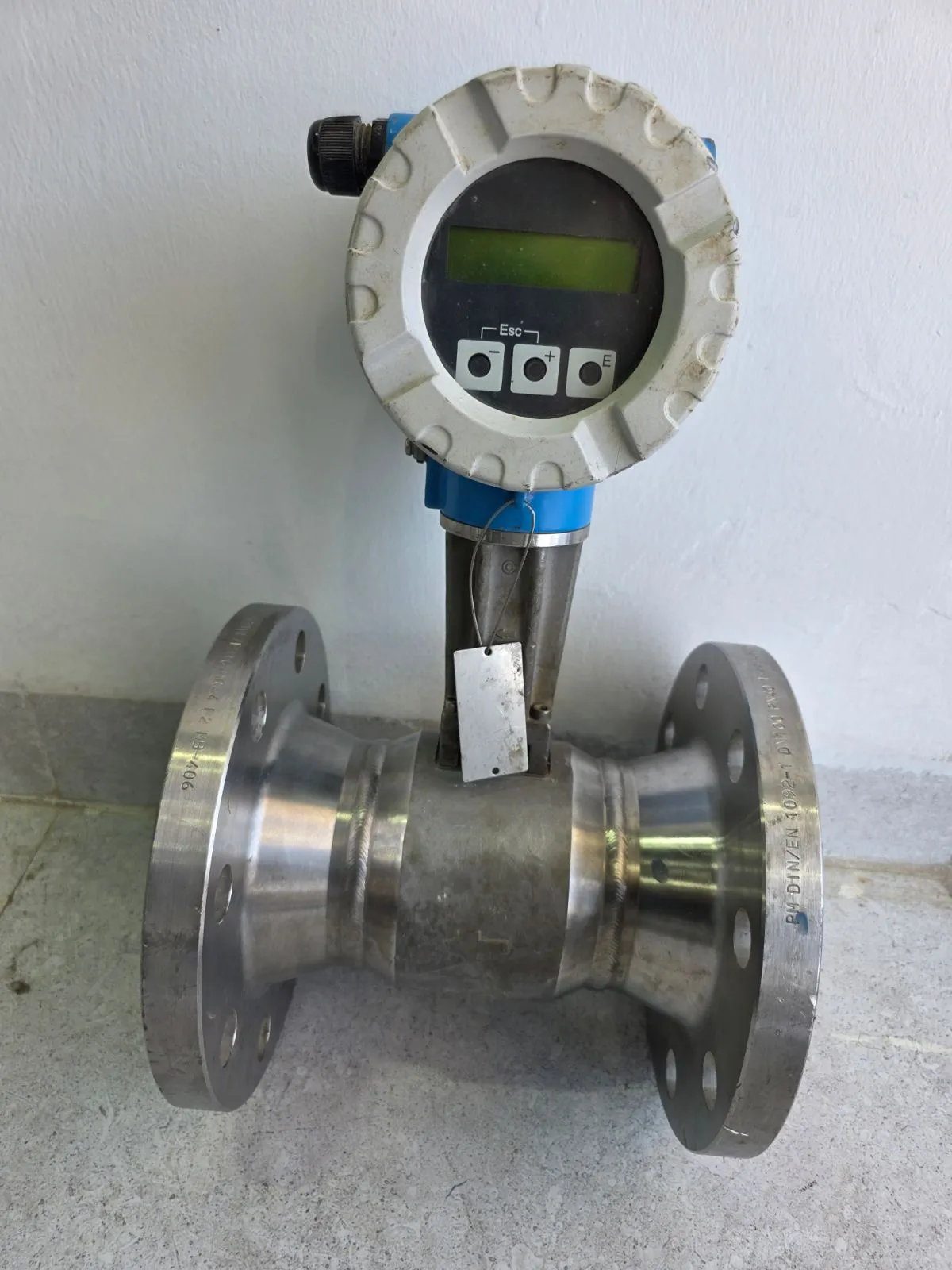
 3 یەکە بەردەستە
Endress+Hauserفلۆمیتەرەکان


What the Endress+Hauser Prowirl 72F order code contains, the size codes the manufacturer actually publishes, how to read the rest from the nameplate, and how to replace a discontinued 72F today.
ئەم بەشە تەنها بە زمانی ئینگلیزی بەردەستە
The Endress+Hauser Proline Prowirl 72F is a flanged vortex flowmeter for gas, steam and liquids, built in nominal diameters DN 15 to DN 300 (½" to 12"). Endress+Hauser no longer sells it — its product page is marked "no longer available" and points to the Proline Prowirl F 200 as the successor — but the Prowirl sensor behind it has, by Endress+Hauser's own count, served in more than 200 000 applications, and 72F units remain in service, in spares stores and on the second-hand market. Every one of them carries an order code, and that code is what you need for a spare transmitter, a like-for-like replacement or a quotation for the current model.
This guide explains what the 72F order code is, which parts of it Endress+Hauser has published, how to read the rest from the nameplate, and what each decision behind the code means for a buyer in Iraq or the wider region.
A Prowirl 72 order code has two halves separated by a hyphen. The nameplate examples in the operating instructions show the pattern:
72XXX-XXXXXXXXXXX      transmitter / compact device
72WXX-XXXXXXXXXXXX sensor of a remote versionOne honest limit before going further: Endress+Hauser does not publish a position-by-position key for those characters. Both the Technical Information and the operating instructions say that "detailed information on the order code can be obtained from your Endress+Hauser Service Organization" and that the meanings of the individual letters are given on the order confirmation. Anyone offering you a full decoding table for a 72F is guessing. What you can do reliably is read the nameplate, use the published size codes, and specify the decisions listed in this guide.
The 72F was also made with an integrated line-size reduction, so a small meter can sit in a larger pipe without separate reducers and extra straight runs. These versions are the only ones whose size code Endress+Hauser prints in the datasheet:
| Style | Code | Pipe size → meter size |
|---|---|---|
| R Style single reduction | 7*F RF | DN 25 (1") → DN 15 (½") |
7*F RG | DN 40 (1½") → DN 25 (1") | |
7*F RJ | DN 50 (2") → DN 40 (1½") | |
7*F RK | DN 80 (3") → DN 50 (2") | |
7*F RM | DN 100 (4") → DN 80 (3") | |
7*F RN | DN 150 (6") → DN 100 (4") | |
7*F RR | DN 200 (8") → DN 150 (6") | |
| S Style double reduction | 7*F SF | DN 40 (1½") → DN 15 (½") |
7*F SG | DN 50 (2") → DN 25 (1") | |
7*F SJ | DN 80 (3") → DN 40 (1½") | |
7*F SK | DN 100 (4") → DN 50 (2") | |
7*F SM | DN 150 (6") → DN 80 (3") | |
7*F SN | DN 200 (8") → DN 100 (4") | |
7*F SR | DN 250 (10") → DN 150 (6") |
The asterisk stands for 2 or 3 (Prowirl 72F or 73F). If your nameplate code begins 72FRK, you have a DN 80 flange pair with a DN 50 measuring section — order the same, not a plain DN 80.
The transmitter nameplate of a compact 72F carries thirteen fields. The ones that matter for re-ordering are:
| Field | What it tells you |
|---|---|
| Order Code | The full 72F…-… string. Photograph it; do not retype it. |
| Ser. No. | Serial number — Endress+Hauser's Device Viewer returns the documents and configuration for this exact unit. |
| Size | Nominal diameter, e.g. DN100. |
| K-factor | The calibration constant in pulses per litre, unique to the sensor. A replacement transmitter must be programmed with it. |
| Materials / Gasket | Measuring tube and seal material, e.g. CF3M/F316/F316L/1.4404 and Graphite. |
| TM | Permitted fluid temperature range, which identifies the sensor version (standard or high/low temperature). |
| Ta | Permitted ambient temperature. |
| Power supply / outputs | e.g. 12–36 V DC, 4…20 mA, HART, power consumption. |
| IP rating, PED category | Degree of protection (IP 67 / NEMA 4X) and Pressure Equipment Directive category, if applicable. |
| Certificates field | Ex marking and approvals of this version. |
A remote-version sensor has its own nameplate with the sensor half of the code (72WXX-… or 72FXX-…), size, K-factor and materials; the transmitter has a separate one.
Vortex meters measure velocity, so the usable range depends on size and fluid. The table gives the water range per flanged size from the operating instructions, together with the K-factor band; the frequency the transmitter sees runs from 0.5 Hz to 2 850 Hz.
| DN | inch | Water, min–max (m³/h) | K-factor (pulses/dm³) |
|---|---|---|---|
| 15 | ½" | 0.16 – 5 | 390 – 450 |
| 25 | 1" | 0.32 – 15 | 70 – 85 |
| 40 | 1½" | 0.91 – 37 | 18 – 22 |
| 50 | 2" | 1.5 – 62 | 8 – 11 |
| 80 | 3" | 3.4 – 140 | 2.5 – 3.2 |
| 100 | 4" | 5.9 – 240 | 1.1 – 1.4 |
| 150 | 6" | 13.4 – 550 | 0.3 – 0.4 |
| 200 | 8" | 25.7 – 1 050 | 0.1266 – 0.14 |
| 250 | 10" | 40.6 – 1 650 | 0.0677 – 0.0748 |
| 300 | 12" | 58.2 – 2 360 | 0.0364 – 0.0402 |
Two rules decide the size, not the pipe: the flow must stay above a Reynolds number of 4 000 (full accuracy above 20 000), and the velocity must not exceed 9 m/s for liquids or 75 m/s for gas and steam (46 m/s at DN 15). If your normal flow sits near the bottom of the range, the R- or S-Style version is usually the right answer. Endress+Hauser's Applicator tool sizes it exactly for your fluid.
Whatever the letters are, each position records one of the following choices. Have all of them ready when you ask for a quotation.
Flanges to EN 1092-1 (DIN) PN 10 to PN 250, ASME B16.5 Class 150 to 1500 or JIS B2220 10K to 40K. Only the flanged 72F goes above PN 40 / Class 300 / 20K; the wafer 72W stops there. State the flange standard, rating and facing exactly as on the mating flange.
Up to PN 40 / Class 300 / 20K the measuring body is cast stainless steel A351-CF3M (1.4408) to NACE MR0175/MR0103, with Alloy C-22 as an option on the 72 only. Up to PN 160 / Class 600 / 40K it is CF3M; for PN 250 / Class 900–1500 and butt-weld versions it is 316Ti/316L (1.4571). Sour-service sites in Iraq should ask for the NACE statement explicitly.
The capacitive DSC sensor comes as a standard version (−40 to +260 °C) and a high/low-temperature version (−200 to +400 °C); Inconel, titanium Gr. 5 and Alloy C-22 sensors cover the high-pressure and corrosive variants, and a special version to +450 °C exists on request. Seals: graphite (−200 to +400 °C), Viton (−15 to +175 °C), Kalrez (−20 to +275 °C) or Gylon PTFE (−200 to +260 °C). Compare your maximum fluid temperature with the "TM" line on the old nameplate before assuming the standard version.
The standard 72 has a 4–20 mA current output with HART plus a pulse/status output that can also give the raw vortex frequency or a PFM signal; alternatives are PROFIBUS PA and FOUNDATION Fieldbus. This choice also fixes the supply voltage: 12–36 V DC for the standard version (18–36 V with HART), 12–30 V DC for Ex i, 15–36 V DC for Ex d; fieldbus versions run on 9–32 V DC.
Non-Ex, intrinsically safe (Ex i / IS), Ex n or flameproof (Ex d / XP), certified to ATEX, FM, CSA, TIIS or NEPSI. The housing is powder-coated die-cast aluminium, IP 67 / NEMA 4X; the Ex d housing is a different casting with slightly larger dimensions, so a compact Ex d unit is not a drop-in for an Ex i one.
Compact means transmitter on the sensor; remote puts the transmitter up to 30 m away on a wall or pipe bracket, with a separate mounting kit and a sensor cable. High-temperature steam lines and hard-to-reach positions are the usual reasons for remote.
Two-line display with push buttons or a blind version. Calibration is on a rig traceable to national standards, with measured error better than 0.75 % of reading for liquids and 1 % of reading for gas and steam (Re > 20 000). The device can be delivered pre-programmed if you state the operating language, the fluid type, the 20 mA value, the pulse value, and the operating (and reference) density when you want mass or corrected-volume units.
Pressure Equipment Directive category, SIL 2 for safety loops, a Dualsens version with two sensors and two electronics for redundant measurement, and the perforated-plate flow conditioner as an accessory.
Vortex meters need a fully developed flow profile. The datasheet's minimum straight runs upstream of the meter are: 15×DN after a reducer, 17×DN plus 8×h after an expansion, 20×DN after a single 90° elbow or tee, 25×DN after two elbows in one plane, 40×DN after two elbows in different planes, and 50×DN after a control valve — always with 5×DN downstream, and the longest figure governs when there are several disturbances. A flow conditioner between two flanges brings every case down to 10×DN with full accuracy. Pressure taps belong 3–5×DN downstream and temperature taps 4–8×DN downstream. If the available run is short, budget for the conditioner or a reduced-bore version before you finalise the order.
You have three routes:
72XXX-XXXXX…) defined by approvals, housing, cable entry, display, software and outputs. The sensor stays, and the new transmitter is programmed with the sensor's K-factor from the nameplate.To get a usable quotation for any of the three, send: a photo of the nameplate (order code and serial number), the fluid and its normal, minimum and maximum flow, operating pressure and temperature, the flange standard and rating on the pipe, the hazardous-area zone, the required output or bus, and whether the unit is compact or remote. With those eight items the code can be reproduced without guesswork.
ئەم بەشە تەنها بە زمانی ئینگلیزی بەردەستە
No. Endress+Hauser's product page marks the Prowirl 72F as no longer available and lists the Proline Prowirl F 200 (first 7F2B, now 7F2C), the O 200 and the R 200 as successors. 72F units still change hands as unused stock, refurbished units and spare transmitters, and Barmaan lists one DN 100 unit with its official documentation.
On the order confirmation issued with the device, or from Endress+Hauser's service organisation using the serial number. The Technical Information and the operating instructions say so explicitly and do not print a position-by-position key. The only codes published in the datasheet are the R Style and S Style line-size-reduction codes (RF to RR, SF to SR). Everything else — size, K-factor, materials, temperature range, supply, outputs, IP rating, PED category and Ex marking — is printed as plain text on the nameplate.
Yes. Endress+Hauser listed the Prowirl 72 transmitter as a separately orderable accessory, defined by approvals, degree of protection, cable entry, display, software and outputs. The sensor keeps its K-factor, which is printed on the nameplate and must be entered into the replacement transmitter. Match the Ex version too: an Ex d housing is a different casting from the standard or Ex i one.
Usually for the common sizes and ratings, but not automatically. The current Prowirl F 200 (7F2C) covers −40 to +260 °C as standard (−200 to +400 °C as an option) and pressure ratings up to PN 100 / Class 600 / 20K, whereas the 72F went to PN 250 / Class 1500 with special sensors. A high-pressure 72F is replaced by the Prowirl O 200, a reduced-bore one by the R 200. The new order code is built in Endress+Hauser's product configurator from the process data, not by translating the old letters.
3 یەکە بەردەستەEndress+Hauserفلۆمیتەرەکان
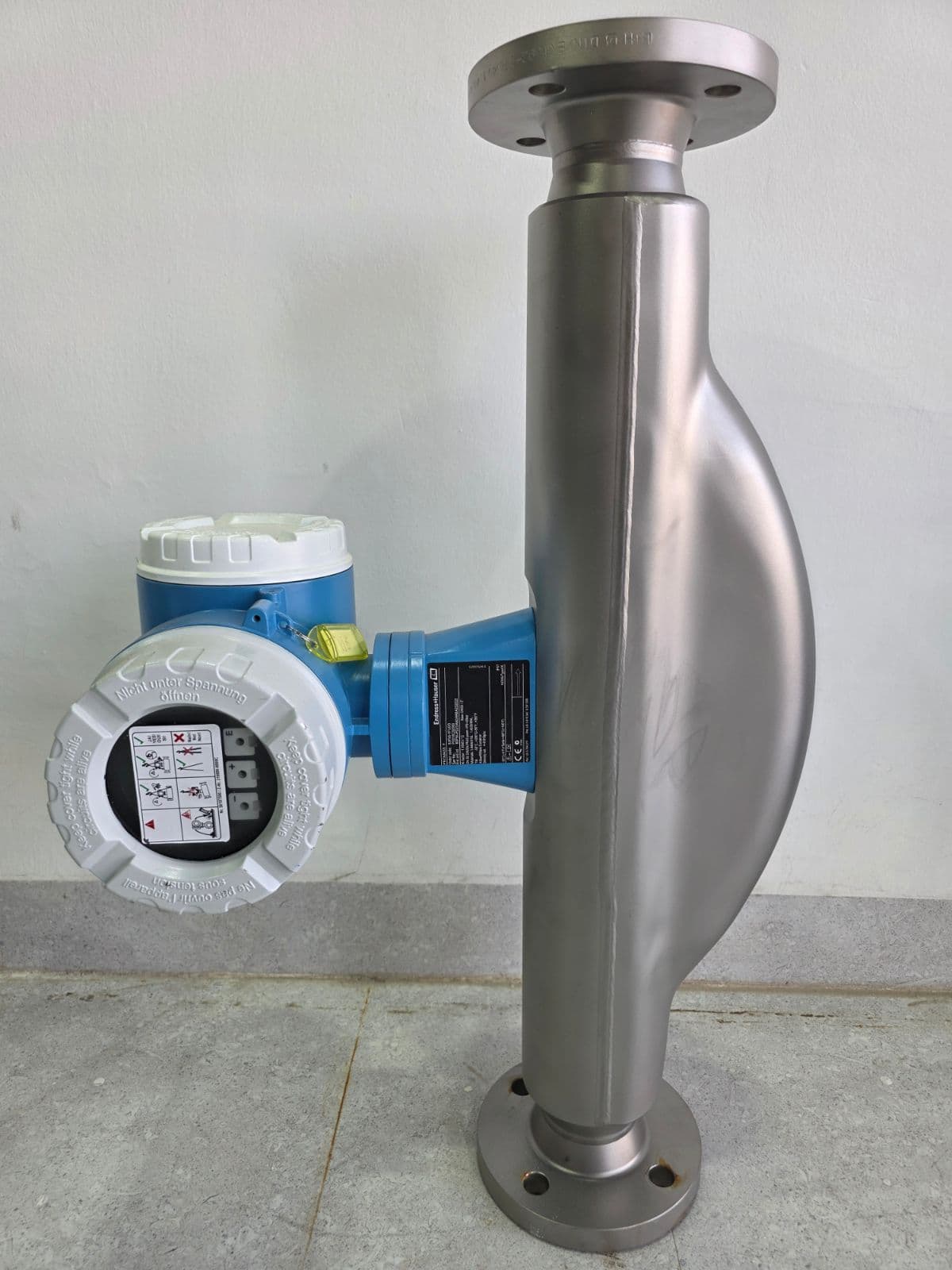 3 یەکە بەردەستە
Endress+Hauserفلۆمیتەرەکان
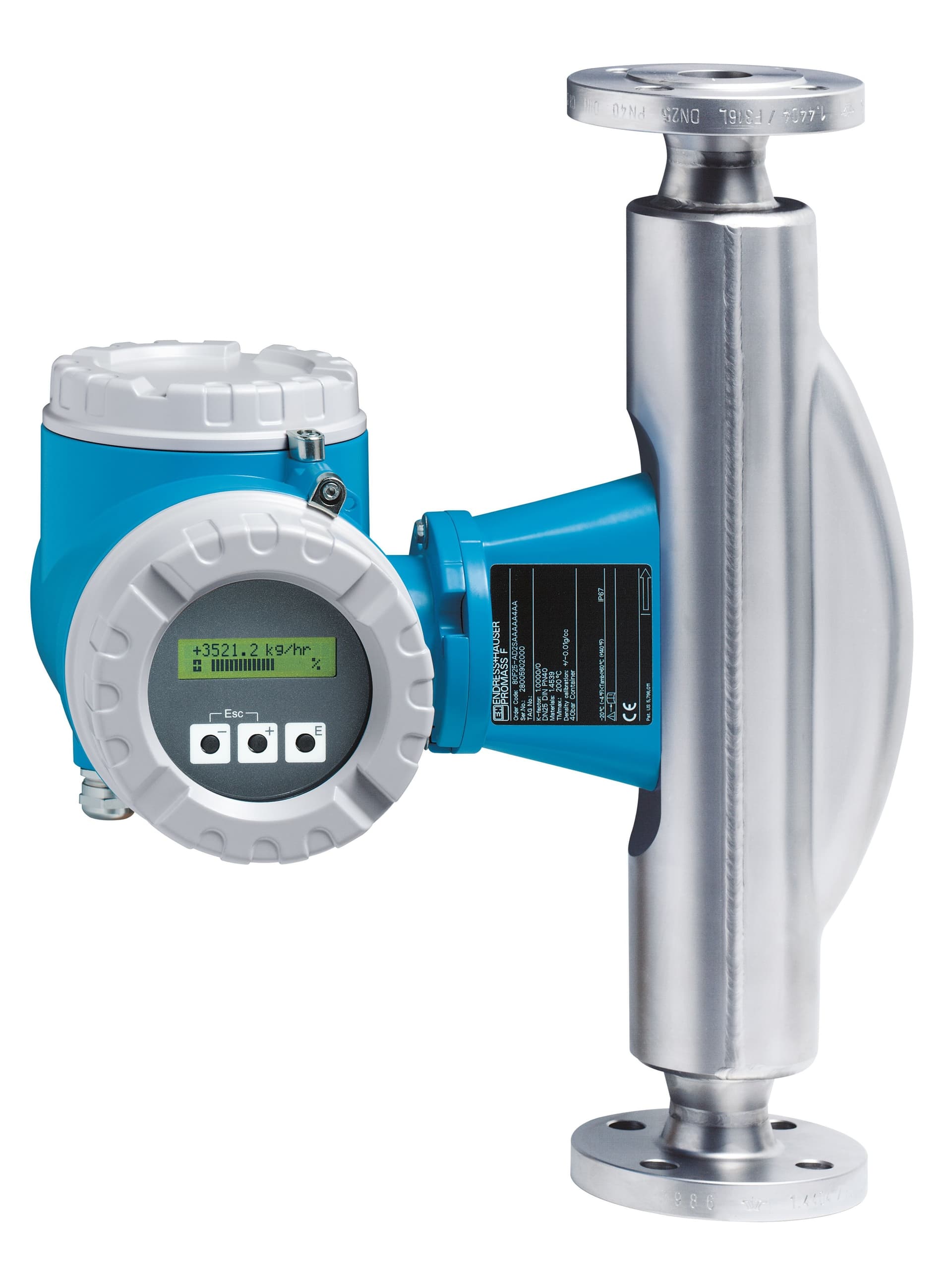 7 یەکە بەردەستە
Endress+Hauserفلۆمیتەرەکان
ISO/IEC 17025 ستانداردی نێودەوڵەتی شیاوی تاقیگەکانی تاقیکردنەوە و کالیبراسیۆنە. تاقیگەکان لەلایەن دەستەی متمانەپێدانی نیشتمانییەوە بەم ستانداردە متمانەیان پێدەدرێت — نەک وەک ISO 9001 بڕوانامە وەربگرن.
پێداویستیەکەت پێمان بڵێ — ئەندازیارانی بارمان بەرهەمی دروست پێشنیار دەکەن و پێشفاکتۆر ئامادە دەکەن.